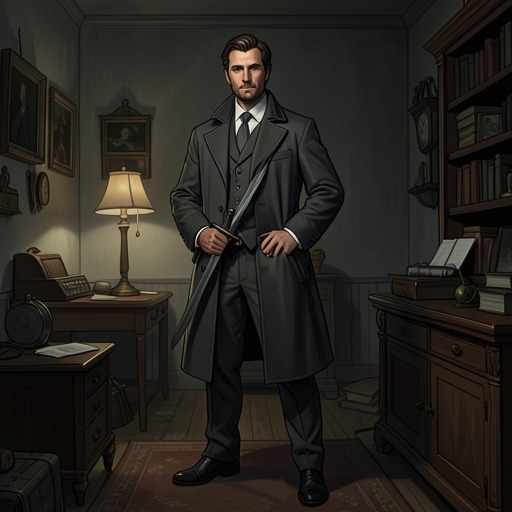
“At the envoi’s end, I touch!”
Cyrano de Bergerac“At the envoi’s end, I touch!” is the refrain that turns Cyrano de Bergerac’s duel with the Viscount de Valvert into a contest of verse and swordplay. First announced as a promise to strike on the ballade’s final line, the phrase returns throughout the fight and is spoken again at its close, when the Viscount staggers. Its force lies in that convergence: Cyrano does not merely describe an intended blow but makes the poem’s ending mark its arrival.
The insult and the challenge
The exchange begins with the Viscount’s attempt at a quip. Facing Cyrano, he calls his nose very big; Cyrano gravely answers, “Very!” Rather than treating the insult as a wound to be hidden or denied, he accepts its premise and takes control of the encounter. The verbal challenge becomes the occasion for a public demonstration of wit as well as fencing skill.
Cyrano announces that he will compose while they fight and touch his opponent at the final line. He casts the encounter as a ballade about the duel at the Hotel de Bourgogne, presenting himself and the Viscount as its subjects even as their fight is still unfolding. The poem’s form is therefore part of the action: its promised conclusion supplies a deadline for the physical contest.
A refrain made physical
Before they engage, Cyrano begins the ballade’s choreography. He doffs his beaver, frees his hand and heel, throws off his mantle, and wheels around with the grace of Phoebus and the alertness of Scaramouch. The gestures make the verse visible: the audience hears a poem while watching its speaker move and fight.
The refrain first appears as a confident forecast, with Cyrano claiming that he will touch the Viscount at the envoi’s end. As the duel continues, he varies the threat rather than abandoning it. After a hit, he dismisses the blow as slight and predicts a stroke to the Viscount’s paunch; later he repeats that the touch will come at the envoi. These returns give the phrase a changing function. It begins as a wager on what Cyrano will do, becomes a taunt while the fighting proceeds, and keeps the promised final line in view despite the intervening exchanges.
The envoi and its consequence
When Cyrano announces the envoi, the poem reaches the point at which its refrain has been promising a decisive touch. The Viscount reels; Cyrano salutes and declares, “At the envoi’s end, I touch!” The line now names an accomplished result rather than a future intention. The timing makes the boast appear exact: the verbal close and the Viscount’s defeat arrive together.
The scene’s audience confirms that the duel is also a public performance. Acclamations and applause follow; flowers and handkerchiefs are thrown down, and officers gather around Cyrano to congratulate him. The refrain has thus done more than punctuate a clever poem. By joining a challenge, a sequence of swordplay, and its witnessed conclusion, it makes Cyrano’s verbal control part of his victory and turns the insult about his nose into the opening beat of a triumph on his own terms.